
JHU Pava Center
Johns Hopkins University
About us
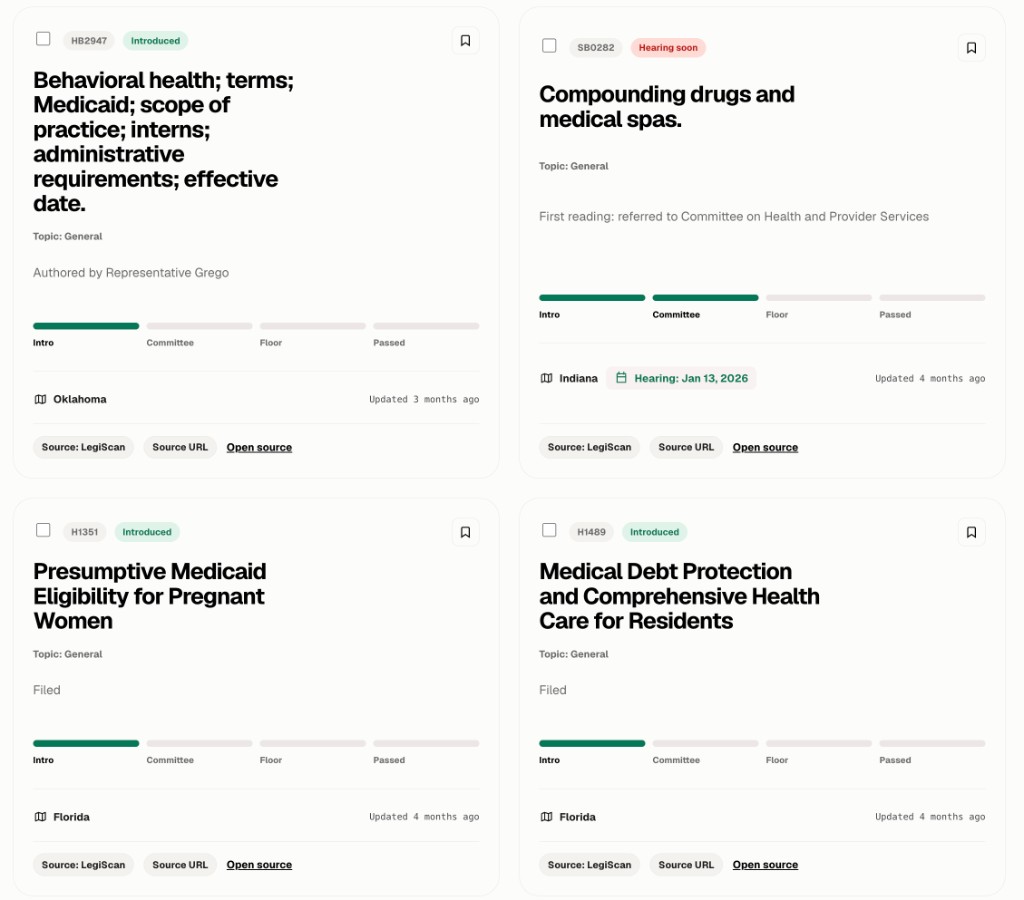
Epieme makes public patient-safety policy records searchable, source-linked, and visible before the hearing, vote, or comment period is already over.

Epieme is supported by university innovation partners who help move civic health technology from idea to real-world deployment.
Johns Hopkins University

at Northeastern University




Origin
Patient safety was never an abstraction in Samson's house. His mom is a pediatric ICU doctor, the person families trust on the worst day of their lives.
Then he watched the system fail her up close.
She raised concerns about safety at the Maine hospital where she worked, and not long after, she was forced out. Samson was fifteen. He wrote a petition about what happened. The hospital's answer was to threaten her with a defamation suit and claim she had written it for him.
So he went looking for the record that proved what they already knew. It was all there, just scattered to pieces. Incident reports in one database, safety ratings in another, the petition on Change.org, the legislative fight buried in committee calendars, and the coverage spread across a dozen news sites that each told one slice of it.
Every time, the deadline moved faster than he could assemble the picture. A hearing would pass. A comment window would close. By the time the story was clear, the chance to act was usually gone.
He did that search by hand, over and over, because nothing existed to do it for him. The petition reached 22,000 signatures. FIRE took up the case. Maine passed LD 870, its anti-SLAPP law, partly because of what his family went through. The fight got won. The system that made it so hard to fight was still standing.
So he built the tool he had needed at seventeen. Epieme pulls the scattered signals together, incident reports, public records, legislation, local news, and turns them into issues anyone can follow. Every summary links back to its source. Every action window stays in view while there's still time to use it.
Word got out. Advocates, patients, and watchdogs in other states started asking for the same thing. What began as one family's fight to be heard is becoming the platform that helps people across all 50 states catch the warning signs early and act while it still matters.



What we believe.
Make patient-safety records visible while people still have time to act.
A future where safety signals are easy to follow, verify, and share.
Help patients, advocates, and watchdogs connect evidence to action across all 50 states.
Samson Cournane, solo founder and Johns Hopkins MSE graduate student.
LinkedIn profileSource provenance, update cadence, and correction paths should be visible before any pilot.
Read methodologyCivic-tech and health-adjacent tools need an explicit accessibility standard.
Accessibility statementPublic state legislative pages, hearing calendars, source documents, petitions, and related policy records. Each surfaced claim should link back to the underlying source.
Patient-safety advocates and policy teams who need to verify public records quickly. Hospital and institutional pilots should use the same source-first workflow.
No. Epieme tracks public policy and accountability records. It does not provide clinical guidance, diagnosis, or legal advice.